News | 29 September 2026
New report: Swedish students at the bottom of world rankings for grit
Swedish 15-year-olds show the least grit in the entire world. At the same time, Swedish schools suffer from one of the most disruptive classroom environments in the Western world. This is shown in a new research report by Dr Nima Sanandaji.
In the PISA 2018 survey, only 59% of Swedish students answered that they feel satisfaction from working as hard as they can in school – the lowest recorded figure in the world alongside Finland. In PISA 2025, the consequences become clear, not least for students' reading comprehension. Without persistence and a calm learning environment, many students remain at a superficial reading level and lose the ability to analyse and understand more demanding texts and solve problems.
– Schools that dare to maintain order, structure, and high expectations give students the security to build up their grit and mental stamina. This benefits everyone, but it is absolutely crucial for students from homes without an academic background, says Dr Sanandaji.
The report's three key insights:
-
Disruption drains the brain: Noise and digital distractions overload students' working memory and hinder the development of long-term grit.
-
Grit is contagious: Calm school days and structured break activities build the perseverance needed in the classroom, during leisure activities, and in working life.
-
Schools must set the standards: Clear requirements and adult presence are key to strengthening young people's trust, study motivation, and faith in the future.
– High academic expectations for all students have been part of Internationella Engelska Skolan's ethos for 33 years. That PISA shows enormous shortcomings in Swedish students' grit when facing difficult tasks reinforces our conviction that our way of working is crucial for students to reach their full potential, says Linda Öholm, vice CEO of Internationella Engelska Skolan.
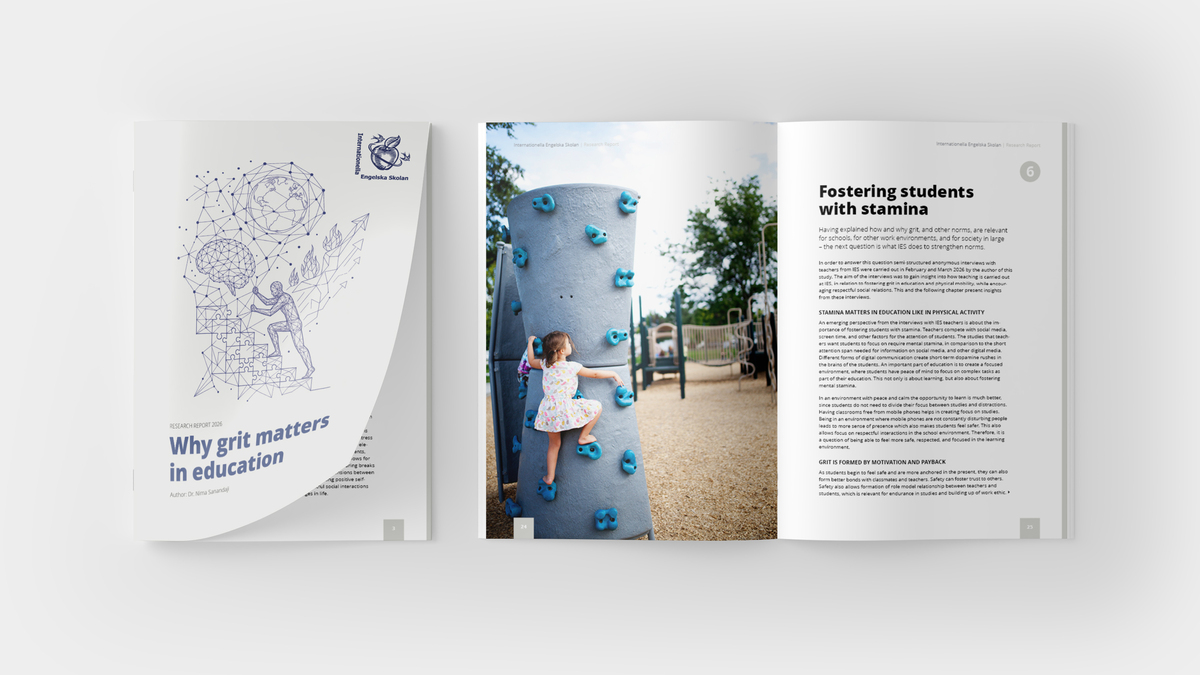
The report "Why grit matters in education" is now published by Internationella Engelska Skolan.
Read the full report by Dr. Nima Sanandaji