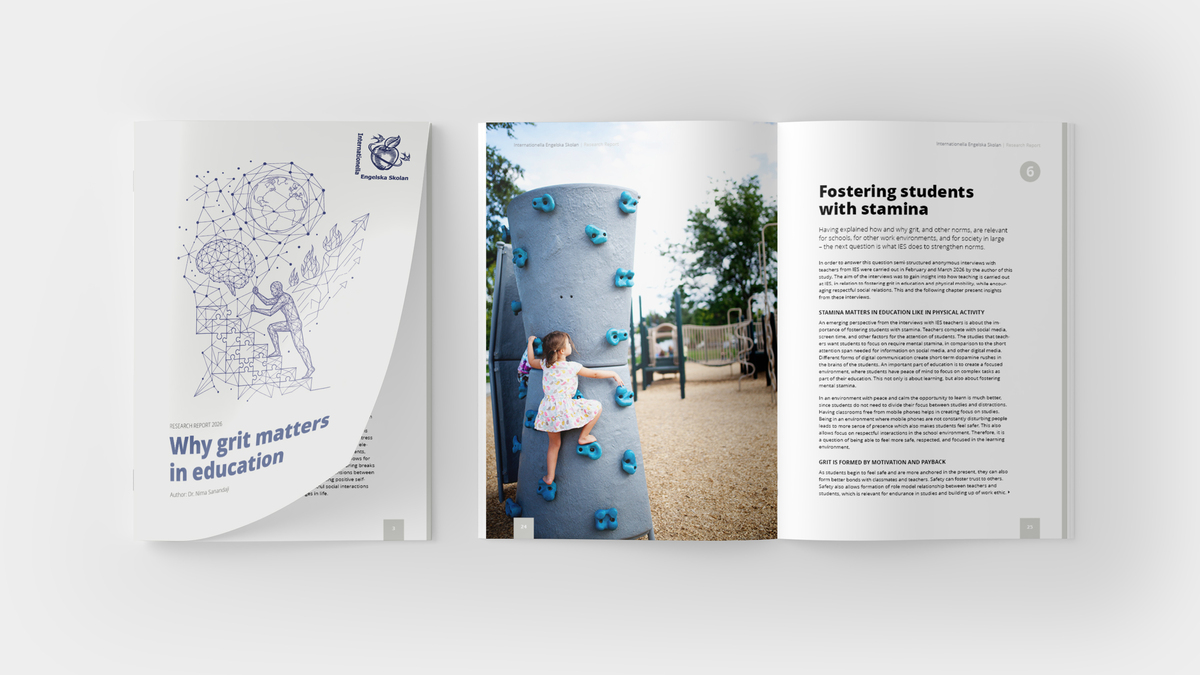
Read the full report by Dr. Nima Sanandaji
This aspect of education needs to be strengthened in Sweden. An OECD special report published in 2026 shows that Swedish schools have some strengths but suffer from some of the worst disciplinary climates amongst the countries included in this global study. According to the World Value Survey, the share of Swedish youth who believe that hard work is an important quality to have in life is considerably lower than in other advanced economies; there is a widespread lack of grit.
High levels of trust have historically characterised Nordic societies, and has been called Nordic gold since trust encourages cooperation, investment, and entrepreneurship. The belief that strangers in general can be trusted is however lower in Swedish youth compared to middle-aged and older individuals on average. In part the reduction in trust can be linked to the benefit morale of Swedish youth falling dramatically. With this background, this study gives a comprehensive background on why grit is so important for success in education and other work environments, and why schools that focus on orderly environments and high expectations prepare their students for success in life. Semi-structured anonymous interviews with teachers from Internationella Engelska Skolan (IES) give insights into how the schools work with implementing a structured and positive work environment.
Minimising classroom distraction is a key part of the IES model. When students can focus on their studies properly, this also gives them the ability to progress with planned and focused work, creating an atmosphere where grit can be fostered. This is in line with research about the working memory of the brain, as distractions make it difficult to process information in the school environment, leading to stress and lower ability to progress with studies. High expectations are another key element. When teachers are transparent about their expectations for the students, and clear on what the students need to achieve to progress further, this allows for trust and for the formation of mentor relationships. Organised sports during breaks introduce leadership structure, boost health, and lead to reduced tensions between students, with less bullying as result. Overall focus is on promoting positive self-reinforcing routines, with grit in studies, sports, and respectful social interactions – with the aim of preparing students for future challenges in life.