News | 14 September 2026
With an 89 per cent turn out, IES students made their voices heard.
Students in years seven to nine voted, and the preliminary results suggest swift negotiations with a new government able to form right away.
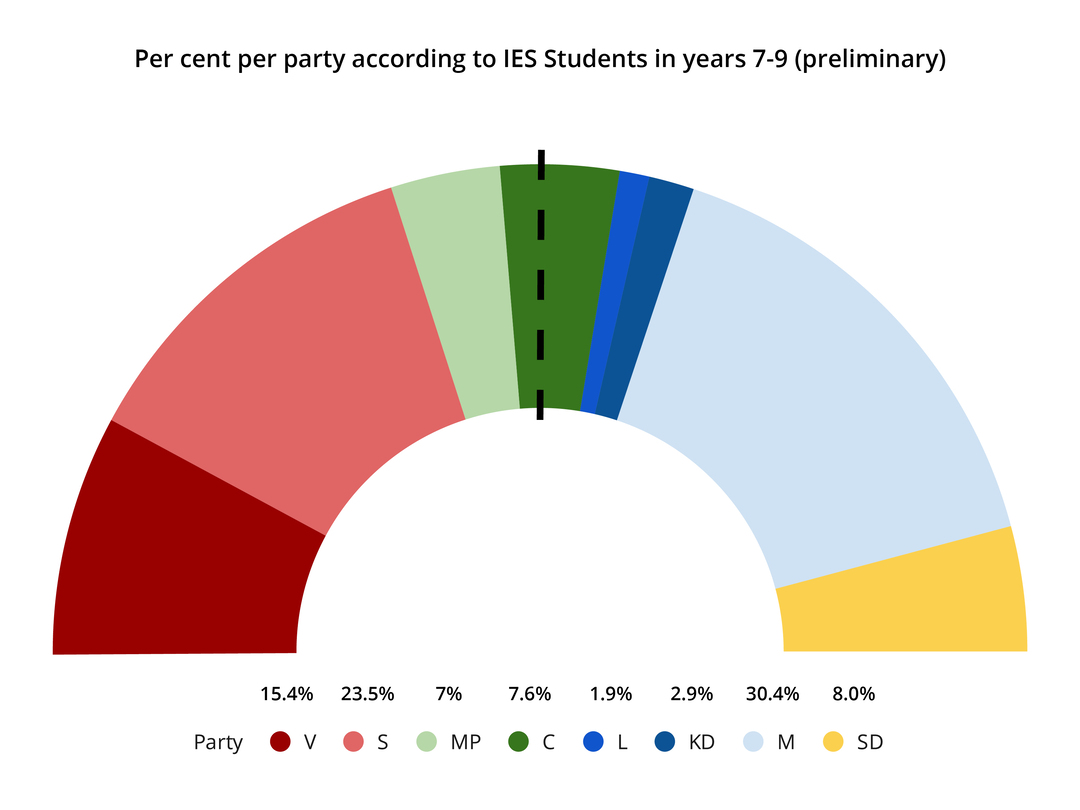
IES students' voice: How parliament could have looked
An election at IES schools may have seen the moderate party receive the highest proportion of votes, but it also paved the way for a red-green coalition to take power - with Magdalena Andersson having the strongest case to take up the post of prime-minister.
Monika Englund, the organisation's subject facilitator for social science, said: “I am very proud that so many students and SO teachers took the time to participate in the important parliamentary school election or organized their own elections. Kudos you to you all.”
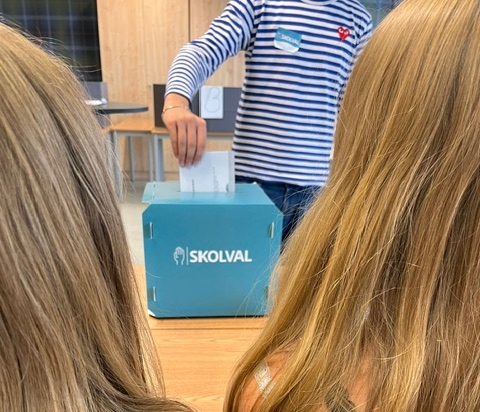
A total of 6230 IES students out of the 6993 eligible at the 24 schools taking part cast their votes in the election.
The moderate party was the largest with 30.4 per cent of the vote, but speaker's job looks far easier in IES schools, where the opposition parties secured 53.4 per cent of the vote, while the Tidö parties received 43.3 per cent.
Beyond the main eight parties, other parties on the ballot received a combined 3.3 per cent of the vote.