News | 19 November 2026
IES Landskrona Students Win First Place for Bee-Saving Research
At November’s FIRST LEGO League in Helsingborg, twenty cross-year teammates from IES Landskrona impressed local energy experts and brought home two trophies. Combining scientific curiosity with real-world problem-solving, the years 4–9 robotics team earned first place for their research project and second place in robot challenges.
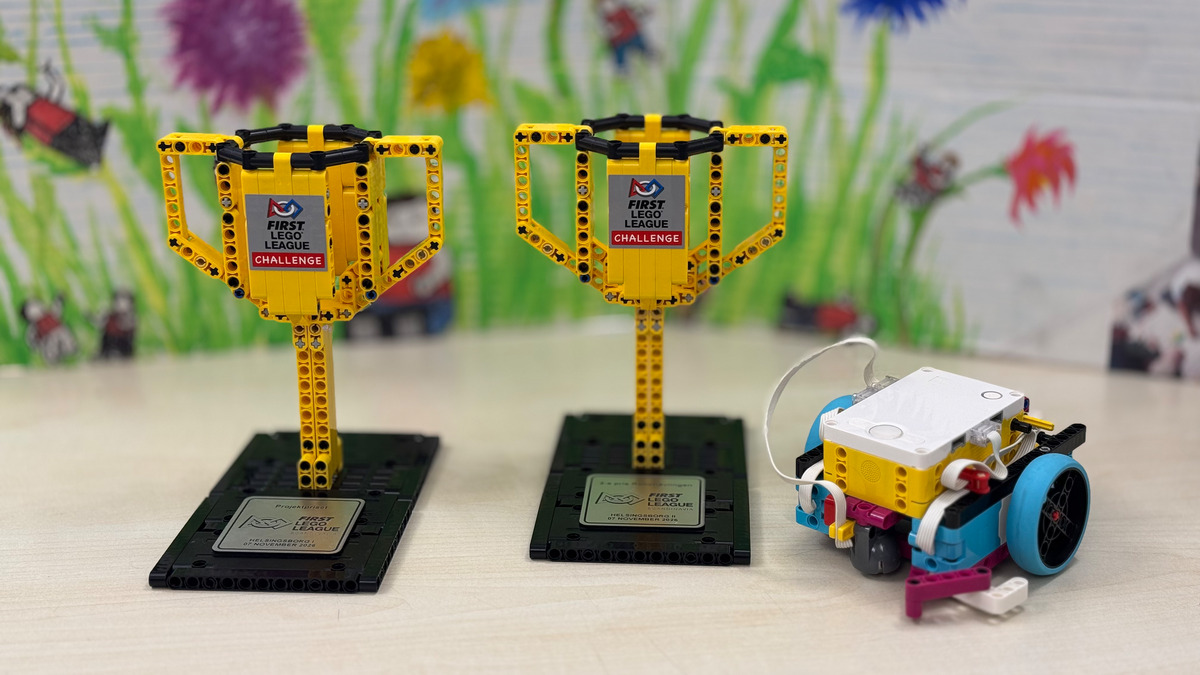
FIRST® LEGO® League is an international science and robotics programme designed to spark young people’s interest in engineering and teamwork. Held in Helsingborg on 7 November, the regional tournament evaluates teams equally across four categories – each worth 25 per cent of the final score: an Innovation Research Project, a timed Robot Game, Robot Design, and Core Values. To succeed, students must investigate a genuine community issue, build and code an autonomous LEGO robot, and demonstrate respect and sportsmanship throughout the day.
Guided by teachers Ms MacIsaac and Ms Serra, IES Landskrona’s 20-member squad tackled an urgent environmental question: how magnetic fields generated around expanding data centres disrupt bees, which are vital pollinators for our ecosystems. To protect them, the students designed specialised shielding plates. Around eight team members visited Landskrona Energi, toured the company’s server halls, and pitched their idea directly to staff. They also spoke with a project manager from the World Bank to test whether their solution was realistic and financially sustainable in the long run.
“They showed us a bit of the server halls and talked about their company, and then we got to present our solution and the problem we see,” one student explained. “They said they would really like to see this solution in the future – for us to make it an actual product – and they would like to put up the plates on their facilities.”
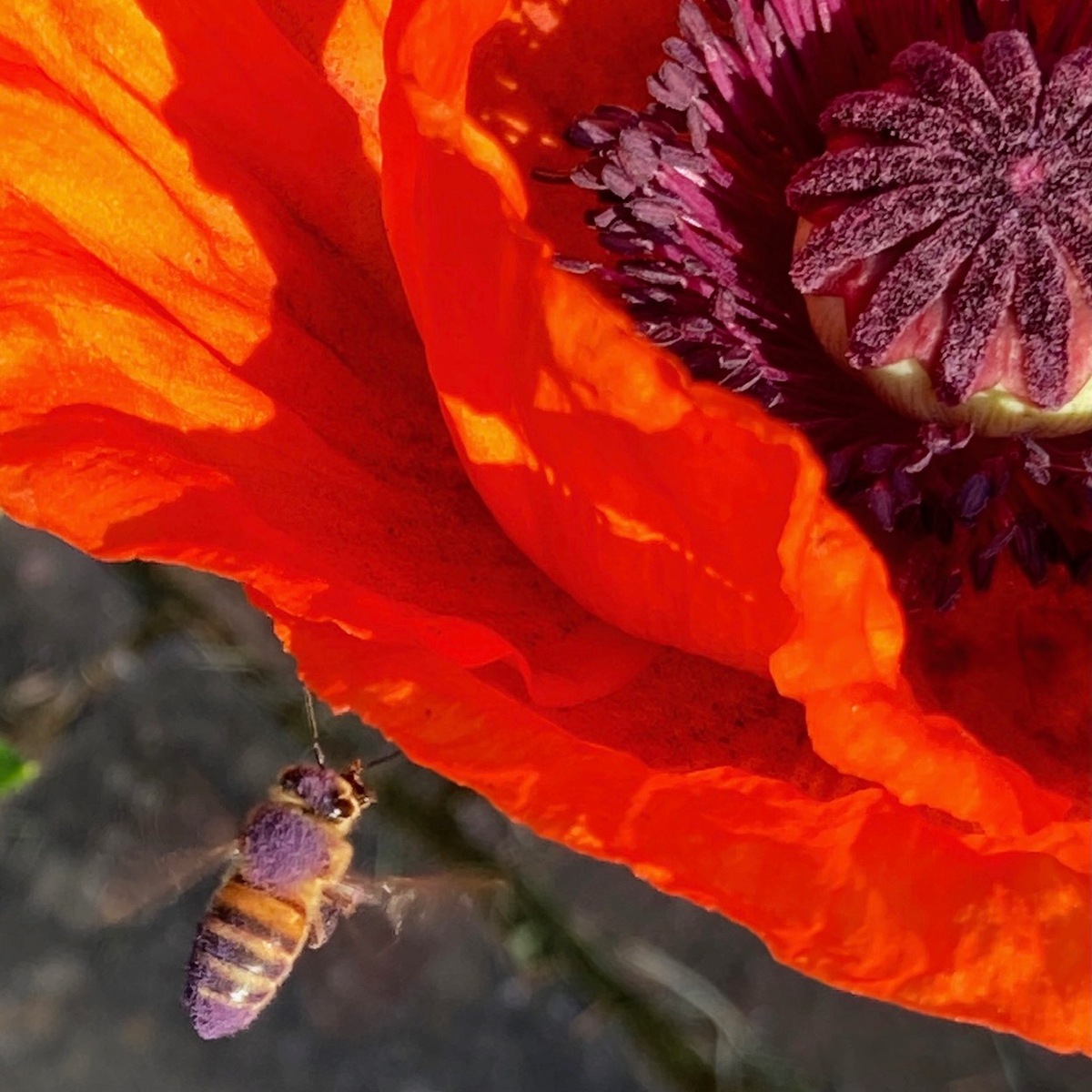
A busy honeybee leaving a vibrant red poppy, covered in purple pollen as it works to pollinate our natural ecosystems. Photo credit: Melanie Prinsloo
Teamwork in the robot arena
Working in a bilingual environment, the students built a smaller, faster robot with interchangeable arms to solve complex board obstacles, including a tricky mission called Humongous Fungus. The weeks before the competition, they timed every practice run to sharpen their speed. Rather than staying in separate groups, all twenty students rotated between robotics and research, voted democratically on presentation designs, and cheered loudly for fellow schools – earning second place in the robot game alongside their research victory.
“Even though the ages vary, we could communicate well,” another teammate shared, reflecting on how year 4 to year 9 students collaborated. “It was fun to see the younger kids’ creative side and steer it with more professionalism.”
This achievement captures what preparing students for the world looks like in practice: blending high academic expectations, respect across age groups, and the courage to turn classroom knowledge into real-world impact.